
Introduction
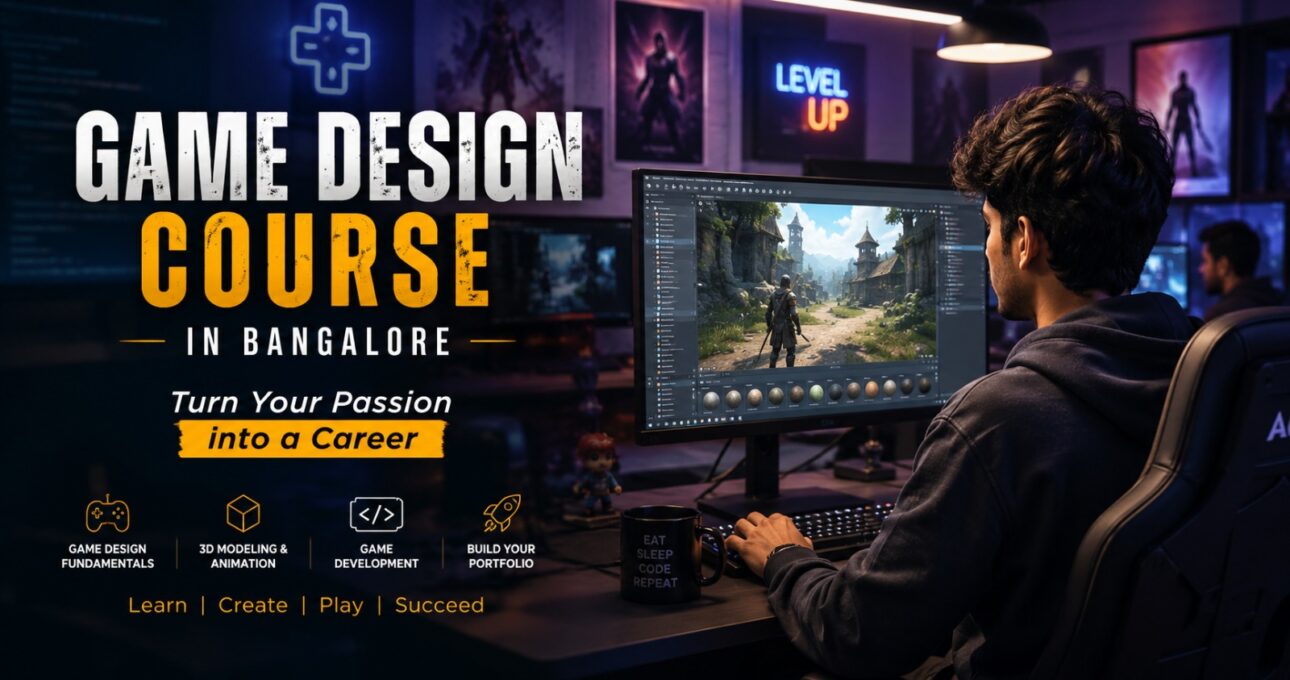
Do you love playing games and often wonder how they are made? From exciting characters and beautiful worlds to game rules and challenges, every part of a game is created by skilled professionals. If you want to turn your interest in gaming into a career, joining a game design course in Bangalore can be a great starting point.
Bangalore is one of India’s leading technology and creative hubs. The city offers many opportunities for students seeking careers in game design, game development, animation, 3D design, and interactive media. With the right training, you can learn how games are planned, designed, developed, tested, and launched.
A professional course can also help you build practical skills and a portfolio that can support your job search or freelance career.
Why Choose Game Design as a Career?
The gaming industry has grown rapidly in recent years. Games are no longer limited to computers and gaming consoles. Today, people play games on smartphones, tablets, PCs, and other devices.
This growth has created opportunities for people with different skills. A game team may include game designers, developers, artists, animators, UI designers, sound designers, testers, and producers.
Game design is especially suitable for people who enjoy creativity, storytelling, technology, and problem-solving. You do not simply learn to play games. You learn how to create experiences that keep players interested.
What Will You Learn in a Game Design Course?
A good course should cover both creative and technical areas. The exact syllabus may differ between institutes, but most programs introduce students to the basic stages of game creation.
Game Design Fundamentals
You will learn how to develop a game idea and turn it into a playable experience. This can include game rules, player goals, challenges, levels, rewards, and game mechanics.
You may also learn how to create a basic game design document. This document helps the development team understand how the game should work.
2D and 3D Game Design
Modern games use attractive visuals to create engaging experiences. During your training, you may learn about 2D and 3D assets, characters, environments, objects, textures, and basic animation.
These skills are useful when working with artists and developers on a game project.
Game Engines
Game engines are important tools for building and testing games. Unity is widely used for creating games across different platforms and is a useful tool for beginners to learn.
Unreal Engine is another powerful platform known for its advanced graphics and real-time 3D capabilities. Learning these tools can help you understand how game ideas are converted into working games.
Level Design
Level design is about creating the spaces and challenges players experience while playing a game. You can learn how to plan levels, place objects, create challenges, and manage difficulty.
Good level design keeps players engaged without making the game too easy or frustrating.
Game Testing
Testing is another important part of game development. You need to identify bugs, gameplay problems, controls that do not work properly, and other issues before a game is released.
Learning basic testing methods helps students understand the complete game production process.
Game Design vs Game Development
Game design and game development are connected, but they are not the same.
Game designers mainly focus on the experience and rules of the game. They think about gameplay, levels, characters, challenges, and player interaction.
Developers focus more on the technical side. They use programming and game engines to make the planned features work.
If you enjoy both creativity and technology, a game development course can also be a useful option. Some programs combine game design, development, programming, 3D graphics, and game engines.
Skills You Can Build Through Game Design Training
A professional course can help you develop several practical skills.
Game concept development
Story and character planning
Level design
2D and 3D game concepts
Unity and Unreal Engine basics
Game mechanics
Basic programming concepts
UI and user experience
Game testing
Problem-solving
Team collaboration
Portfolio development
These skills can help you understand how different departments work together during game production.
Career Opportunities After a Game Design Course
Completing a game design course in Bangalore can open the door to different career paths. Your exact opportunities will depend on your skills, portfolio, specialization, and experience.
Some possible roles include:
Career Role | Main Work | Useful Skills |
Game Designer | Plans gameplay, rules, levels, and mechanics | Game concepts, level design |
Game Developer | Builds game features and systems | Programming, Unity, Unreal Engine |
Level Designer | Creates game levels and challenges | Level design, game mechanics |
3D Game Artist | Creates characters, objects, and environments | 3D design, modelling |
Game UI Designer | Designs menus and player interfaces | UI/UX, visual design |
Game Tester | Finds bugs and gameplay issues | Testing, attention to detail |
Game Animator | Creates movement and character animation | Animation, 2D/3D skills |
Why Bangalore Is a Good Place to Learn Game Design
Bangalore has a strong technology and creative ecosystem. The city is home to companies, startups, training institutes, studios, and professionals working in technology, animation, media, and interactive content.
Studying in Bangalore can also give students opportunities to attend workshops, industry events, seminars, and networking sessions.
Another advantage is exposure to a large professional community. Meeting designers, developers, artists, and other creative professionals can help you understand current industry expectations.
How to Choose the Right Course
Before joining a course, do not select an institute only because of its name. Check what you will actually learn.
Look for a course that provides:
Practical Training
Choose a program that allows you to work on projects instead of only learning theory. Practical projects help you understand real production workflows.
Industry-Relevant Software
Check whether the syllabus includes popular tools such as Unity, Unreal Engine, and other software relevant to your chosen specialization.
Portfolio Support
A strong portfolio is important when applying for creative roles. Look for a course where you can create multiple projects that demonstrate your skills.
Experienced Trainers
Trainers with practical industry experience can give you useful guidance about workflows, tools, projects, and career preparation.
Career Guidance
Placement support, interview preparation, resume guidance, and portfolio reviews can be helpful when you are preparing for your first job.
Who Can Join a Game Design Course?
A game design program can be suitable for students, graduates, working professionals, and creative individuals who want to enter the gaming field.
You do not always need to be an expert gamer or programmer to begin. A willingness to learn, creative thinking, and interest in technology can help you get started.
If you are new to the field, begin with the basics and gradually build your skills through projects.
Build a Strong Game Design Portfolio
Learning tools is only one part of becoming job-ready. You also need to show what you can create.
Start by developing small projects. You could create a simple mobile game concept, a basic 2D game, a small 3D environment, or a level design project.
For every project, explain your role and the tools you used. Add screenshots, videos, design documents, and a short description of your creative decisions.
A portfolio gives employers a clear idea of your abilities and can make your application stronger.
Conclusion
Gaming is no longer just a form of entertainment. It has become a growing creative and technology-driven field with opportunities for people who have the right skills.
A game design course in Bangalore can help you understand game concepts, level design, game engines, visual design, testing, and production workflows. Learning tools such as Unity and Unreal Engine can further improve your practical skills.
If you are passionate about games, start learning, create projects, build your portfolio, and keep improving. With consistent practice and the right training, your passion for gaming can become a rewarding career.
FAQs
1. What is a game design course?
A game design course teaches students how to plan and create games. It can cover game mechanics, level design, storytelling, characters, game engines, UI, testing, and other areas of game production.
2. Is a game design course in Bangalore good for beginners?
Yes. Beginners can start with basic concepts and gradually learn advanced tools and techniques. You do not need to be an expert before joining a course.
3. Do I need programming skills to learn game design?
Basic programming knowledge can be useful, especially if you want to move into game development. However, game design also involves creative areas such as gameplay planning, level design, storytelling, and player experience.
4. Should I learn Unity or Unreal Engine?
Both are useful game engines. Unity is popular for many types of games and is often approachable for beginners. Unreal Engine is known for powerful real-time 3D graphics. Your choice can depend on your career goal and the type of games you want to create.
5. What jobs can I get after completing a game design course?
Depending on your skills and specialization, you can explore roles such as game designer, level designer, game developer, 3D game artist, game UI designer, game tester, or game animator.
6. How can I get a job in the gaming industry?
Build strong practical skills, complete projects, create a professional portfolio, learn industry tools, and apply for internships or entry-level roles. Continuous practice and learning can help you grow in the gaming industry.